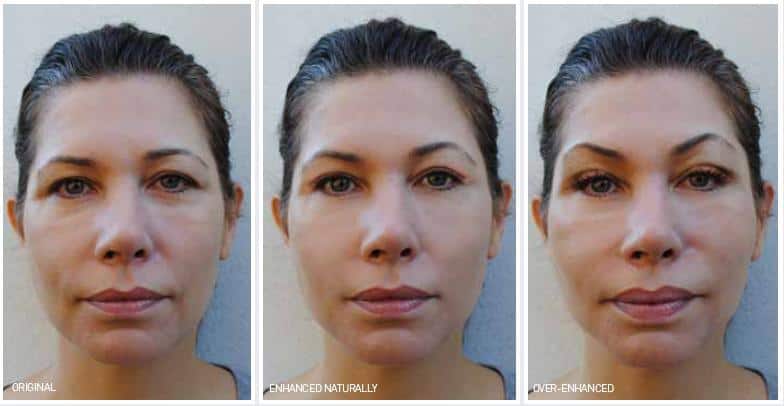

We find out about skin and wrinkle fillers all the time. Actually, all we are required to do is leave the television on for even a few minutes to see smiling women jumping around talking about how Botox/Juvederm/Restalyne makes them feel more youthful and remarkable. That’s terrific.
However most folks have absolutely no idea exactly what the distinctions between any of those products are, since all those ads claim many of the same benefits. So what ARE all the differences and how really SHOULD these types of treatments be used? TheGloss got in touch with Dr. David Mobley, a cosmetic surgeon found in Tampa, Florida to get the lowdown on them.
This is what the distinction is:
Botox:
 It’s a kind of injection that’s mostly utilized for wrinkles and lines around the eyes and the forehead. Those lines can take place early and Botox can actually soften those or, if you catch them early, make them go away entirely. People that begin using Botox in the 20s and 30s can substantially reduce the probability of any lines forming – making it a great preventative procedure. The price for one area usually is right around 250. If you’re interested in getting several areas injected– your eyes, forehead and mouth lines as an example – it could be between $500-$600. Find out more about Raleigh Botox treatment.
Pros: It works extremely well, it’s most likely one most efficient injectables. It’s a really high benefit / low threat treatment, and you don’t see many things that work that well. It can also be done in just a few minutes – there are no major preparations required.
Cons: I would state the con is that there’s the cost and constant maintenance. You have to dedicate yourself to doing it regularly, and it’s going to be $275-$600 every three to 4 months. Other than that, there really are no downsides to using Botox as a treatment and even as a preventative measure.
Juvederm:
 It’s a filler mostly made use of for lines around the mouth. Many of the time that suggests the one crease that goes from the nose to the edge of the mouth called the nasolabial fold. Juvederm is great for softening that fold. In numerous ways, it is very similar to Restalyne– they’re both hyaluronic acids, which is a protein we have in our body anyway. Hyaluronic acid belongs to the cell wall, so it’s natural and we don’t have to be concerned with bad reactions. Juvederm is a thinner consistency than Restlyne, meanings there’s a little less bruising and swelling after the injection. It’s $500 per vial and typical injection would be 1-2 vials. It typically lasts 6 to 9 months when you inject it around the mouth. See more at the Juvederm website.
Pros: It’s smooth in consistency and simple to inject with little bruising. The biggest issue we ever see is a a possible lump forming at the injection site. On the plus side, it’s likewise correctible by an easy injection of an enzyme that will dissolve the amount you injected.
Cons: It likely will not last as long as something like Restalyne, and it will also likely not fill out deep lines nearly as well as the Restalyne might.
Restalyne:
 Similar to Juvederm, Restalyne is made out of hyaluronic acid. Juvederm and Restalyne are actually made by different companies though. Restalyne is slightly thicker containing and comprised of a slightly larger particle. I have come to like it because I believe you get a stronger more fill and correction of lines. I use it in all the same places as Juvederm, but the choice is based on how deep any of the lines may be. Juvaderm is great for smaller and thinner lines, say across the lip, whereas Restalyne, because of the larger particles, tends to work better on the heavier lines. A Restalyne treatment can last 6 to 9 months if used in the mouth area. Another use is sometimes being injected round the eye where some people have dark circles. It might fill these areas where it appears dark, and there it could potentially last for up to two years. Usually though, most people can expect a treatment to last anywhere from 6 to 9 months.
Pros: You get marginally better correction of the lines, specially nasolabial folds.
Cons: It could cause more bruising and puffiness, and this can be an issue for as long as 48 hours. We always recommend that you do it when you won’t have anything to do for that period. You might consider doing this kind of treatment on a Friday afternoon for example.
Read the original at TheGloss